
Resources
Why the body has a voice too
Article
Why the body has a voice too
The body carries wisdom, signals, feelings and information. When we listen to the body, we can restore our connection with our voice, find greater presence and express ourselves more authentically – in line with who we are.


The body carries information
Your body is not just a physical shell – it is an intelligent system that is constantly gathering, processing and communicating information. Through the senses, feelings, tension and sensations, the body tells you what is safe, what is important and what needs attention. It carries experiences, memories and a deep wisdom that often knows more than the head alone.
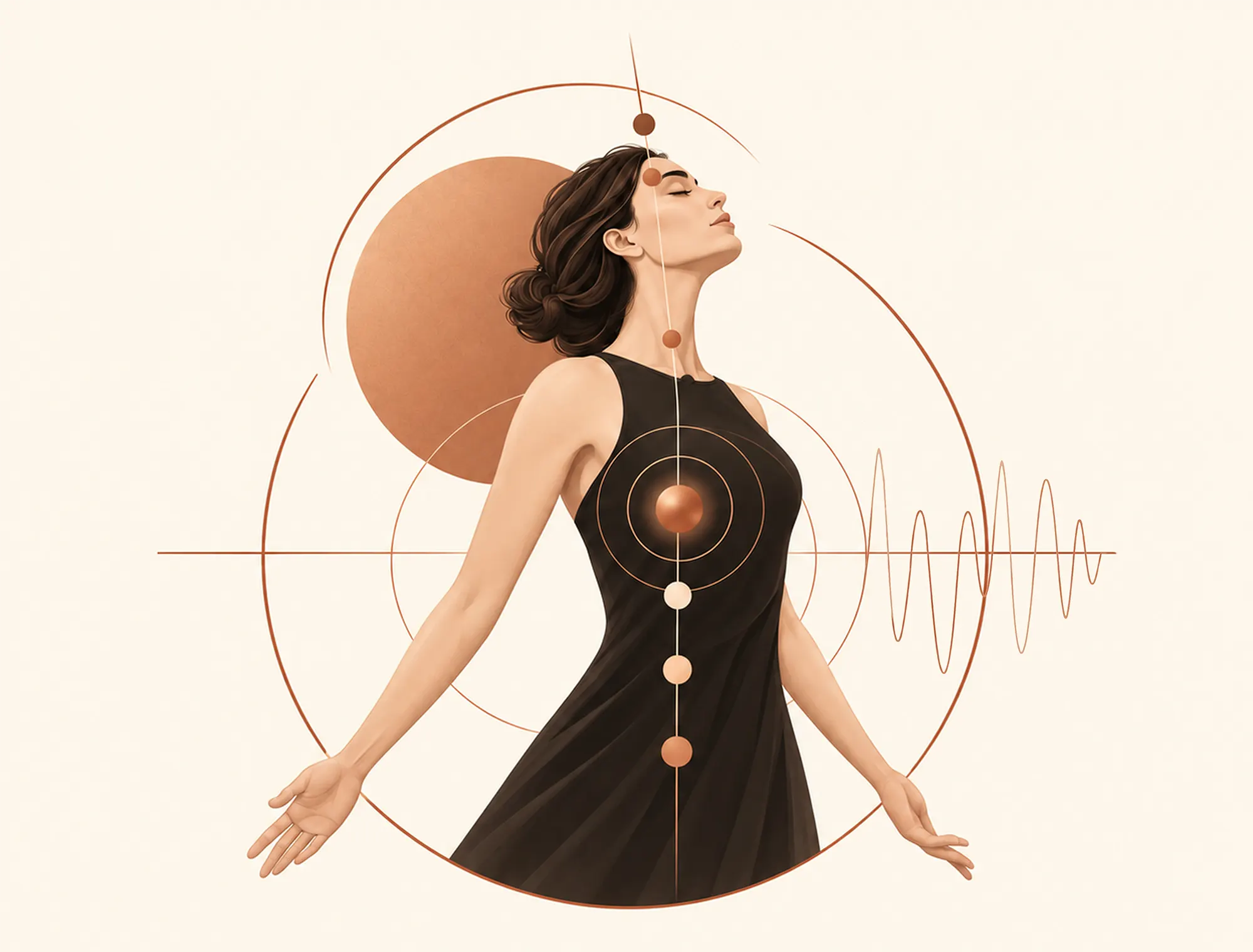
Your body is not working against you,
Andrea Rydin
it is trying to talk to you.
When the body is trying to tell you something
The body communicates all the time, but it rarely speaks in words. It uses signals such as tension, restlessness, tiredness, pain, breath, a racing heart or a feeling of being tense. These signals are not problems to be fixed, but invitations to listen more deeply.


Tension
Muscles that tighten can be a signal of stress, pressure or unconscious feelings.


Breath
The breath tells you how you are doing, and affects body, thoughts and voice.


Emotions
Emotions are felt in the body, and give you valuable information about what matters to you.


Digestion
The stomach often reacts to what we do not get said, or to situations that feel unsafe.


Energy
The body’s energy level is affected by thoughts, feelings, surroundings and how aligned you are with yourself.
How the voice is affected
Breath affects the voice. The body affects the breath. Emotions affect the body. Thoughts affect the emotions.
When we listen to the whole person, we can discover connections that do not become clear when we look only at the voice. That opens up more possibilities for finding a freer expression.
Your voice is part of your body. It is created by breath, muscles, the nervous system and your emotional life. When the body is stressed, tense or out of balance, the voice is affected – it can become weaker, tighter, hoarser, or you may feel you lose it completely. When the body is calmer and more regulated, your voice gains more resonance, power and freedom.
Listening with the whole body
Listening to the body is about being curious, present and open to what is felt. It is a practice of pausing, noticing and making room for what is. When we listen with the whole body, we strengthen our connection with ourselves, and we can make choices that are more in line with what we truly need.
Small signals you can notice
The body often sends small signals in everyday life. Here are some examples:
Restlessness
An inner restlessness with no obvious cause.
Tiredness
You feel exhausted even after rest.
Tension
Stiffness in the neck, shoulders or jaw.
Racing heart
The body reacts to what matters to you.
Shallow breathing
You breathe shallowly, high in the chest.
Gut feeling
A feeling of unease or that “something is not quite right.”
A simple way in
You do not need big changes to begin listening to the body. Start with small pauses. Feel your feet against the floor. Place one hand on your heart. Take a few deep breaths. Ask yourself: How am I really doing right now?
Try this in everyday life
Four simple exercises that help you listen to the body’s signals:
1. Pause
Take a short break and notice how you are right now.
2. Feel the breath
Notice your breath for 1–2 minutes, without changing it.
3. Scan the body
Mentally go through the body from head to toe. What do you notice?
4. Ask a question
What do I need right now? Listen and stay open to the answer that comes.
In short
The body carries wisdom
It gathers and communicates important information.
The body gives you signals
Feelings, tension and sensations tell you something.
The voice is part of the body
Breath, muscles and emotions affect expression.


When you listen, you strengthen yourself
You gain more presence, freedom and an authentic voice.
Curious about how the Leading Voice Method can support you?
When you listen to the body,
you listen to a deeper truth about who you are.


Related articles




Ready to explore your leading voice?
Take the next step towards more freedom, voice and joy in life. Book a no-obligation conversation, or see the programmes.